 🐶 Dog Mystery
The short answer
Leaning is mostly affection and a bid for closeness — your dog literally leaning into the bond. It can also be reassurance-seeking in nervous dogs, or gentle attention-getting.
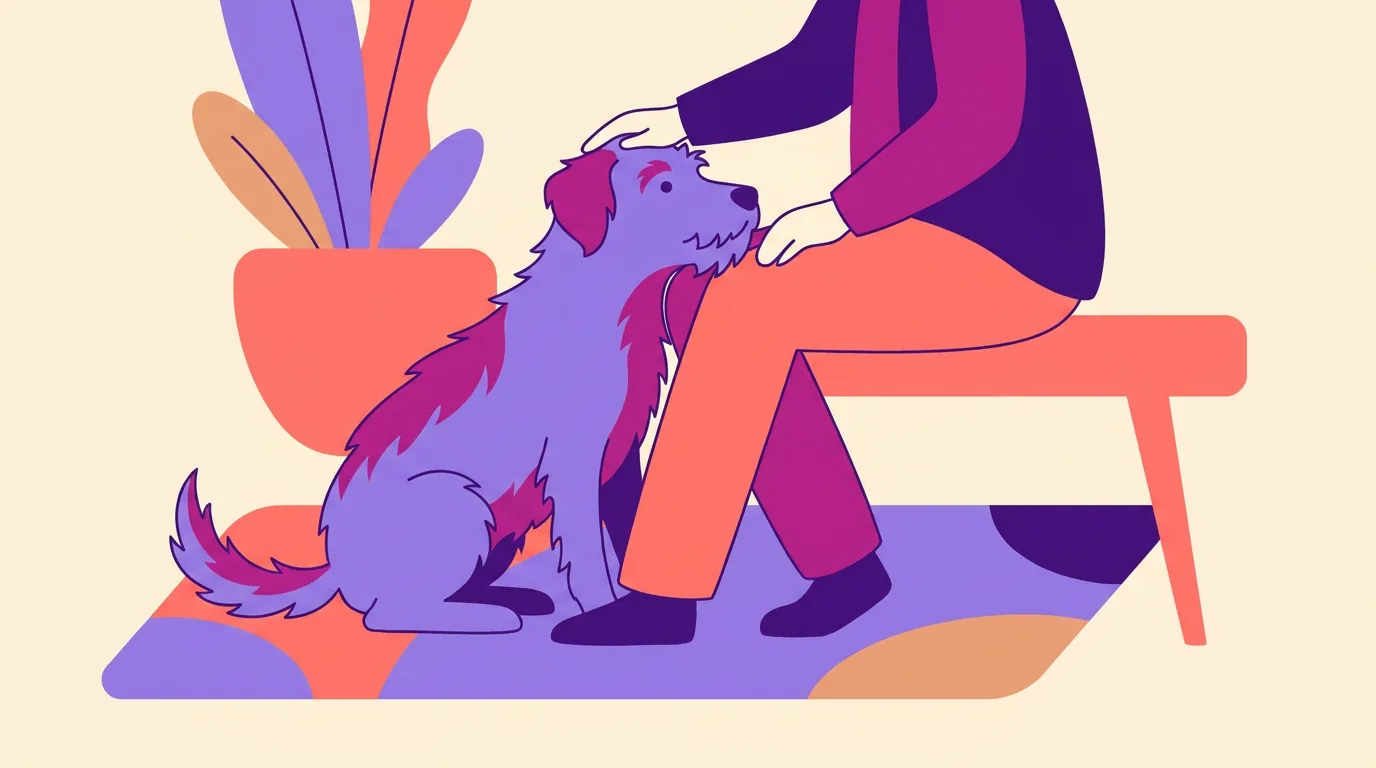
A dog that walks over, turns around, and puts its full weight against your legs is doing something specific. It is not accidental, it is not laziness, and — despite what you may have been told — it is almost never about dominance.
Leaning is contact-seeking, not status
The dominance interpretation of leaning circulated widely for years and has not held up. It came from an outdated model of dog social behaviour based on captive wolf studies that have since been substantially revised by their own original researchers.
What leaning actually resembles, across the behavioural literature on canids, is affiliative contact-seeking — the same category as sleeping in a pile, resting a head on a companion, or standing shoulder to shoulder. Dogs are a social species that uses physical contact to regulate how they feel. Leaning is the adult, upright version of that.
There is also a simple mechanical reason it looks the way it does. Most dogs cannot hug. Leaning, backing into your legs, and sitting on your feet are the available ways for a quadruped to achieve sustained full-body contact with a standing human.
The four things leaning usually means
- 1Affection and bonding. The most common reason. Your dog wants contact and this is how it gets it. It is frequently paired with a loose body, a relaxed tail and a soft face.
- 2Reassurance. Dogs seek contact when uncertain. Leaning that appears at the vet, in a crowd, around fireworks, or when a stranger enters the house is a request for support.
- 3Attention. Leaning very reliably produces stroking. Like most dog behaviours that work, it gets repeated.
- 4Physical support. In older dogs, leaning can be genuinely load-bearing — a way to stay upright when hind-limb strength or balance is failing.
Telling comfort from anxiety
The distinction matters, because the two look superficially similar and need opposite responses.
Relaxed leaning comes with a loose, wiggly body, a neutral or gently wagging tail, an open mouth, soft eyes, and a dog that settles and stays. It usually happens in calm moments at home.
Anxious leaning looks tighter. The body is stiff, the tail is low or tucked, the ears are back, you may see panting without heat or exertion, yawning out of context, lip-licking, or whale eye — the whites showing as the dog keeps its head still. It tends to be triggered by something specific and the dog struggles to settle.
With relaxed leaning, enjoy it. With anxious leaning, do not withhold comfort — the old advice that reassuring a frightened dog reinforces fear is wrong, because fear is an emotional state and not a behaviour being rewarded. Provide calm contact and, more importantly, address the trigger.
Give leaning a name
If you like the behaviour but not always the timing, put it on cue. Reward it when you invite it and simply stand up and step away when you do not, without scolding. A dog that has a reliable way to ask — and a reliable answer — leans less anxiously and more deliberately.
Velcro dogs and separation anxiety
Constant leaning combined with constant following is worth a closer look. Some breeds are simply more contact-oriented, and some individual dogs are naturally clingy. That on its own is not a disorder.
The concerning picture is different: a dog that cannot be out of contact without distress, that panics when you leave, that vocalises, paces, drools, destroys things near exits, or toilets indoors despite being house-trained. That is separation-related anxiety, and it is a genuine welfare problem that responds well to structured desensitisation — and poorly to being ignored or punished.
A useful early signal is a sudden change. A dog that has always been independent and becomes clingy over a short period is telling you something has changed — in its environment, in its health, or in its comfort.
When leaning is a medical sign
Take new-onset leaning seriously in older dogs. It can indicate hind-limb weakness, arthritis, vestibular disease, or vision loss, all of which make a dog seek physical support. Get a vet check if leaning appears alongside difficulty rising, reluctance to use stairs, a wobbly or drunken gait, a head tilt, circling, or bumping into furniture. Leaning into walls or pressing the head against a surface is a different behaviour entirely — head pressing is a recognised neurological sign and needs urgent veterinary attention.
Should you stop it?
For most people, no. It is normal, affiliative behaviour and one of the clearer indications that your dog is comfortable with you.
Practical exceptions exist. Large dogs leaning on children or on people who are unsteady on their feet can be genuinely unsafe, and a dog that leans on strangers may not be welcome. In those cases, teach a solid alternative — a mat settle, or a trained 'go say hi' with defined rules — rather than pushing the dog away. Pushing is ambiguous and often reads as a game.
One last note worth keeping in mind: a dog choosing sustained physical contact with you, in a species with a full repertoire of ways to avoid contact, is a meaningful choice. It is worth not over-analysing.
Gear that actually helps
Hand-picked for this behavior. We may earn a small commission — at no cost to you.
Frequently asked
Why does my dog lean on me?
Most often it is affiliative contact-seeking — the same impulse behind dogs sleeping in a pile or resting a head on a companion. Dogs use physical contact to regulate how they feel, and leaning is the practical way a quadruped achieves full-body contact with a standing human.
Is my dog leaning on me to show dominance?
No. That interpretation came from an outdated model of dog social behaviour based on captive wolf studies that have since been substantially revised. Leaning is contact-seeking, not a status claim.
How do I tell if leaning means my dog is anxious?
Look at the whole body. Relaxed leaning comes with a loose body, neutral tail, open mouth and soft eyes. Anxious leaning is stiff, with a low or tucked tail, ears back, panting without exertion, lip-licking, yawning out of context, or whites of the eyes showing.
Should I comfort my dog when it leans on me out of fear?
Yes. The old advice that comforting a frightened dog reinforces fear is incorrect — fear is an emotional state, not a behaviour being rewarded. Provide calm contact and work on reducing or desensitising the trigger.
My dog suddenly started leaning on me. Should I be worried?
A sudden change is worth investigating, especially in an older dog. Hind-limb weakness, arthritis, vestibular disease and vision loss all cause dogs to seek physical support. See a vet if it comes with difficulty rising, a wobbly gait, head tilt, circling or bumping into things.
Is leaning the same as head pressing?
No, and the difference matters. Leaning against a person is social. Pressing the head persistently against a wall or furniture is a recognised neurological sign and needs urgent veterinary attention.
Sources
Every claim on this page is checked against published veterinary and animal-behaviour research. Here’s where it comes from.
- 1Understanding Dog Body Language — American Kennel Club
- 2Why Does My Dog Stare At Me? — American Kennel Club
- 3Why do dogs lick humans? — VCA Animal Hospitals
Keep exploring
 🐶 Dog Mystery
Why Does My Dog Lick My Hands? Love, Salt & Information
Your hands are basically a newspaper, a snack, and a love language to your dog — all at once. Here’s the breakdown.
 🐶 Dog Mystery
Why Do My Dog’s Paws Smell Like Fritos? Meet “Frito Feet”
Your dog’s paws smell like a snack aisle — and there’s a real, surprisingly normal reason for it.
Why Does My Dog Yawn So Much?
Your dog yawns way more than seems sleepy — because for dogs, yawning is also communication. Here’s how.
Why Does My Dog Lick His Paws So Much?
A quick clean is fine, but nonstop paw-licking is your dog telling you something’s wrong. Here’s how to decode it.
Why Does My Dog Lick the Floor?
Your dog treats the kitchen floor like a plate. Usually it’s crumbs — but sometimes it’s a clue. Here’s how to tell.
Why Does My Dog Put His Paw on Me?
That gentle paw on your arm is your dog reaching out — literally. Here’s what they’re asking for.