 🐶 Dog Mystery
The short answer
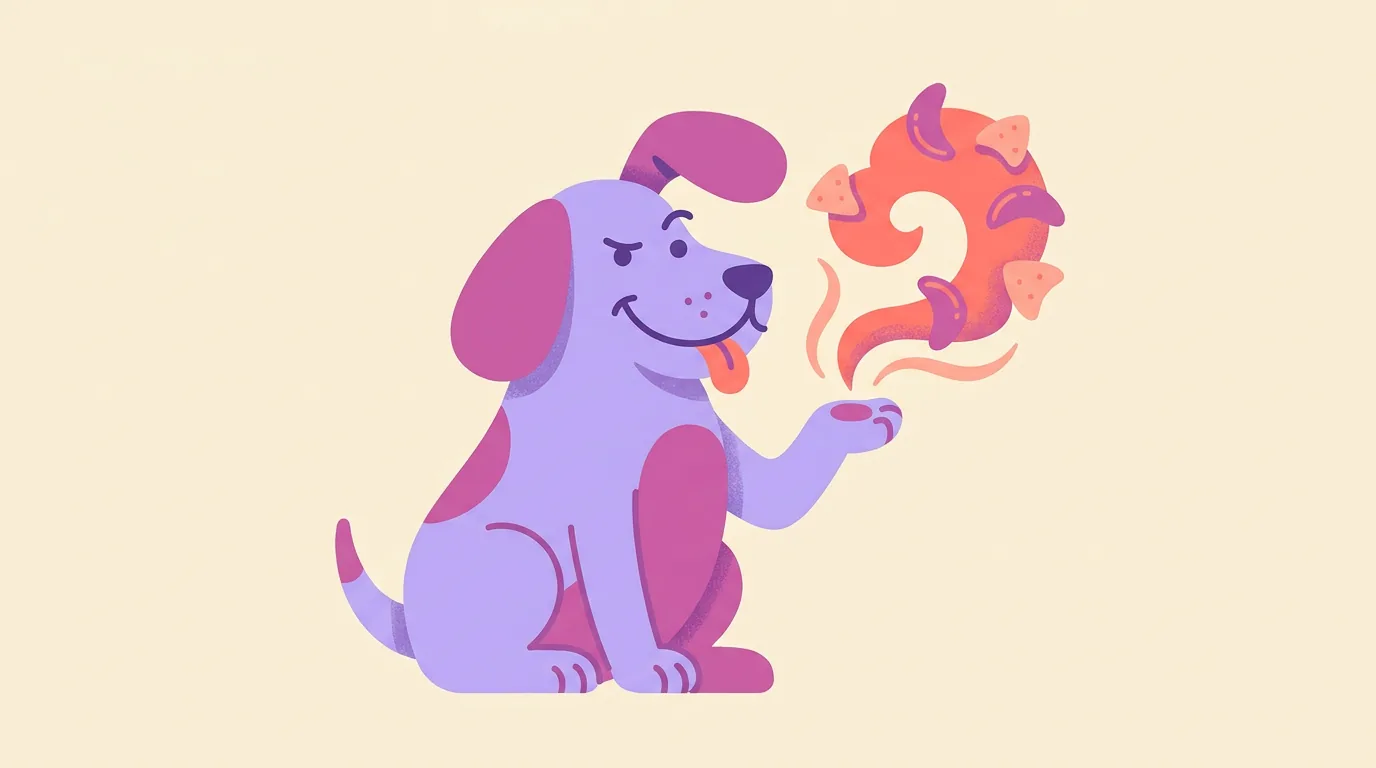
That corn-chip “Frito feet” smell comes from natural bacteria and yeast (like Proteus and Pseudomonas) that live on your dog’s paws. In small amounts it’s harmless and normal. A strong, worsening smell with licking or redness can mean an infection.
It is one of the most widely shared observations in dog ownership, and it has a real microbiological explanation. Frito feet — the corn chip smell coming off your dog's paws — is normal in small amounts and a useful early warning in large ones.
What is producing the smell
Dog paws carry a resident population of bacteria and yeast, as all skin does. Two genera are usually named in connection with the corn-chip note specifically: Proteus and Pseudomonas. Both are ordinary environmental organisms, both are normal residents rather than invaders, and both produce volatile compounds as they metabolise.
Those compounds are what your nose picks up. The comparison to corn chips is not fanciful — several of the molecules involved overlap with those produced during food fermentation and browning, which is why the association is so consistent across owners who have never spoken to each other.
Why paws specifically
Dogs sweat through their paw pads. They do not sweat over the body the way we do, so the pads are one of the few genuinely moist areas of skin they have.
- Moisture is trapped between the toes, where air circulation is poor.
- The area is warm, being in constant contact with the ground.
- Fur between the pads holds damp for longer, particularly in long-coated breeds.
- Paws contact everything — grass, soil, pavement — so they are constantly re-seeded with environmental organisms.
- Dogs lick their paws, adding saliva and further moisture.
That combination is close to ideal for microbial growth, which is why the smell concentrates there rather than elsewhere on the body. The same smell reported from the whole dog usually still originates at the paws, or from skin folds where the same conditions apply.
Normal versus not
This is the part worth getting right, because Frito feet is genuinely benign at low levels and a genuine signal at higher ones.
Normal: a faint, slightly savoury corn-chip smell you notice when your face is near the paws. The paws look normal, your dog is not paying them attention, and the smell does not change much over weeks.
Not normal: a strong smell noticeable from across the room, a sour, musty, cheesy or sharply yeasty quality rather than the mild corn note, or a smell that has clearly intensified. Those suggest overgrowth rather than normal flora.
- Redness between the toes or on the pads.
- Persistent licking or chewing at the paws — often the first thing owners notice.
- Rust or reddish-brown staining of the fur, which comes from porphyrins in saliva and indicates sustained licking.
- Swelling, greasy or flaky skin, discharge, or crusting.
- Limping, or reluctance to walk on hard surfaces.
- Recurrent ear problems at the same time — a very common allergic pattern.
What overgrowth usually means
Yeast and bacterial overgrowth on paws is rarely the primary problem. It is usually secondary to something that has disrupted the skin — most often allergic skin disease.
The AKC's guidance on paw licking makes the same point: environmental allergies, food allergies and contact irritants all cause itchy paws, the dog licks, the paw becomes damp and broken, and the resident organisms multiply into the opening. Treating the infection alone gives a good short-term result followed by a reliable relapse.
The one thing worth doing routinely
Rinse and — more importantly — thoroughly dry the paws after walks, especially in wet weather, in pollen season, or where roads have been salted. Plain lukewarm water is enough. Drying between the toes is the part people skip and the part that matters, because damp between the pads is what lets overgrowth start. Keeping the fur between the pads trimmed helps for the same reason.
What not to do
Do not use human antifungal creams, vinegar soaks or hydrogen peroxide without veterinary advice. Paws are licked, so anything applied is ingested, and several popular home remedies are irritant enough to make a damaged paw worse.
Do not treat repeatedly for infection without asking why it keeps coming back. A dog on its third course of treatment in a year does not have three infections — it has an unaddressed underlying cause, usually allergic.
See a vet if
The smell is strong, sour or clearly worsening; there is redness, swelling, discharge, crusting or greasy skin; your dog is licking or chewing the paws persistently or the fur is stained rust-coloured; there is limping or reluctance to walk; or ear problems are occurring at the same time. Sudden onset in one paw only points to something local — a grass seed, a cut, a torn nail or an interdigital cyst — and grass awns in particular burrow and usually need removing by a vet.
Gear that actually helps
Hand-picked for this behavior. We may earn a small commission — at no cost to you.
Frequently asked
Why do my dog's paws smell like Fritos?
Normal skin bacteria and yeast — Proteus and Pseudomonas are the ones usually named — produce volatile compounds as they metabolise, and some overlap with molecules from food fermentation and browning. Paws are warm, moist from sweat glands in the pads, and constantly re-seeded from the ground.
Why does my dog smell like corn chips?
Same phenomenon. Even when the smell seems to come from the whole dog, it usually originates at the paws or in skin folds where the same warm, moist, poorly ventilated conditions apply.
Is Frito feet dangerous?
In small amounts it is completely normal — a faint corn-chip note with healthy-looking paws needs nothing. It becomes a concern when the smell is strong, sour, musty or clearly worsening, which suggests overgrowth rather than normal flora.
What are the warning signs?
Redness between the toes, persistent licking or chewing, rust-coloured staining of the fur from saliva porphyrins, swelling, greasy or flaky skin, discharge, limping, or ear problems occurring at the same time.
How do I get rid of the smell?
Rinse and thoroughly dry the paws after walks — drying between the toes is the step people skip and the one that matters. Keep the fur between the pads trimmed. If the smell is strong or the paws look inflamed, that needs a vet rather than a home remedy.
Can I use vinegar or antifungal cream on my dog's paws?
Not without veterinary advice. Paws get licked, so anything applied is ingested, and several popular home remedies are irritant enough to worsen a damaged paw. Repeated infections also mean an unaddressed underlying cause, usually allergic.
Sources
Every claim on this page is checked against published veterinary and animal-behaviour research. Here’s where it comes from.
- 1Why Does My Dog Lick and Chew Their Paws? — American Kennel Club
- 2Compulsive Disorders in Dogs — VCA Animal Hospitals
Keep exploring
 🐶 Dog Mystery
Why Does My Dog Smell Like Fish? The Answer Is the Anal Glands
If your dog suddenly smells like a seafood market, the culprit is rarely their diet — it’s a tiny pair of glands most owners don’t know about.
Why Does My Dog Lick His Paws So Much?
A quick clean is fine, but nonstop paw-licking is your dog telling you something’s wrong. Here’s how to decode it.
 🐶 Dog Mystery
Why Does My Dog Sleep at My Feet? Loyalty, Warmth & the Pack
Your dog could sleep anywhere, but they pick your feet. It’s loyalty, security, and a little bodyguard instinct rolled into one.
 🐶 Dog Mystery
Why Does My Dog Sit on My Feet? Closeness, Comfort & Claiming You
Plopping right onto your feet isn’t your dog being bossy — it’s one of the sweeter things they do. Here’s the real meaning.
 🐶 Dog Mystery
Why Does My Dog Lick My Feet? (It’s Weirder — and Sweeter — Than You Think)
Gross? Maybe. But your dog licking your feet is a surprisingly meaningful mix of love, curiosity, and salt. Here’s the breakdown.
 🐶 Dog Mystery
Why Does My Dog Lean on Me? The Quiet Way Dogs Say “I Love You”
When your dog presses their whole body against your legs, it’s not random — it’s one of the most touching things they do. Here’s why.