The short answer
Sleeping between your legs gives your dog warmth, security, and the comfort of your scent in a cozy, semi-enclosed “den.” It’s a bonding, trust-based behavior — and sometimes reassurance-seeking in anxious dogs.
A dog wedged between your legs is asking for something more specific than company. The position maximises contact along the whole length of the body, and dogs that choose it are usually doing one of two things: seeking security, or seeking heat.
Full-body contact is the point
Dogs regulate how they feel through physical contact. It is the same mechanism behind leaning against your legs, resting a head on your lap, and sleeping in a pile with other dogs. Between your legs is simply the position that delivers the most contact surface available on a person lying down.
Puppies sleep pressed into a heap with littermates, where warmth, pressure and the sound of other bodies are constant. Many dogs never lose the preference, and small breeds — who lose heat fastest and were often bred as companion animals — show it most.
The den instinct
Enclosed spaces are attractive to dogs for the same reason they are to cats: fewer open directions means less to monitor, which allows deeper sleep. The AKC links the related habit of burrowing under blankets to an instinct left over from ancestral dogs sleeping in burrows, where a dark, close space mimics a natural den.
Between your legs, particularly under a duvet, is about as close to a den as a domestic dog can get while remaining in contact with its group. Terriers and dachshunds — breeds developed to go to ground — are notably over-represented in this behaviour, which fits.
Warmth
The gap between your legs is heated from both sides and covered above. For thin-coated, small, young, old or underweight dogs, that is a meaningful thermal advantage over the open surface of the bed, and it is often the whole explanation.
Security and anxiety
This is the version worth distinguishing. Some dogs burrow between their owner's legs when something is wrong — during thunderstorms, fireworks, after a house move, or when a new animal has arrived.
Pressure itself is calming to many dogs, which is the principle behind anxiety wraps, and a dog wedged tightly against a person is self-administering that pressure. Occasional burrowing during a storm is a healthy coping strategy. Persistent burrowing, or a dog that cannot settle anywhere else, points to a level of anxiety worth addressing.
Read the difference
Relaxed burrowing looks loose: the dog arrives, circles, flops, sighs and sleeps. Anxious burrowing looks tight — trembling, panting without heat or exertion, ears back, an inability to properly settle, and repeated re-burrowing. If you are seeing the second pattern regularly, the burrowing is a symptom and the trigger is what needs work.
Practical concerns
Two are worth taking seriously. First, a dog fully under the covers is easy to roll onto, and small dogs in particular can be injured. Make sure there is always an easy exit and that you know the dog is there — this matters most with puppies, toy breeds and elderly dogs.
Second, brachycephalic dogs — pugs, French bulldogs, boxers and similar flat-faced breeds — already have compromised airways and overheat easily. A dog like that fully enclosed under a duvet is at genuine risk, and it is worth ensuring they sleep on top of the covers rather than beneath them.
When to speak to a vet
Get a check if burrowing is new and persistent, if it comes with trembling, panting without exertion, restlessness or an inability to settle, or if your dog seems to be seeking pressure constantly. New burrowing in an older dog can reflect pain, declining vision or cognitive change. And any dog showing distress when left alone — vocalising, destruction near exits, house soiling — needs separation anxiety addressed rather than managed around.
Should you allow it?
For most people and most dogs, yes. It is normal, comforting for the dog, and there is no evidence that permitting close sleeping contact causes behavioural problems in a well-adjusted dog.
If you would rather not, the effective approach is the same as always: provide a better alternative rather than simply refusing. A covered or bolstered bed beside your bed, ideally with a blanket the dog can burrow into, satisfies the den and pressure requirements. Reward settling there, and keep the rule consistent — a dog allowed under the covers on some nights and not others will keep trying every night.
Gear that actually helps
Hand-picked for this behavior. We may earn a small commission — at no cost to you.
Frequently asked
Why does my dog sleep between my legs?
It maximises full-body contact, which is how dogs regulate how they feel, and it is enclosed and warm on three sides. Puppies sleep pressed into a heap with littermates and many dogs never lose the preference — small and thin-coated breeds most of all.
Why does my dog burrow under the covers?
Enclosed spaces mean fewer directions to monitor and deeper sleep. The AKC links it to an instinct from ancestral dogs sleeping in burrows, where a dark close space mimics a den. Breeds developed to go to ground, like terriers and dachshunds, do it most.
Is burrowing a sign my dog is anxious?
It can be. Relaxed burrowing looks loose — arrive, circle, flop, sigh, sleep. Anxious burrowing looks tight, with trembling, panting without exertion, ears back and an inability to settle. Occasional burrowing in a storm is healthy coping; persistent burrowing needs the trigger addressed.
Is it safe for my dog to sleep under the duvet?
Usually, with two caveats. Ensure an easy exit and that you know the dog is there, because dogs under covers are easy to roll onto. And flat-faced breeds such as pugs and French bulldogs already have compromised airways and overheat easily — they should sleep on top of the covers.
Does letting my dog sleep in my bed cause behaviour problems?
No. There is no evidence that permitting close sleeping contact causes behavioural problems in a well-adjusted dog. The dominance-based version of that advice is not supported.
How do I get my dog to sleep in its own bed?
Give it something that meets the same needs — a covered or bolstered bed beside yours with a blanket it can burrow into. Reward settling there, and be consistent, because a dog allowed under the covers on some nights will keep trying on all of them.
Sources
Every claim on this page is checked against published veterinary and animal-behaviour research. Here’s where it comes from.
- 1Should I Let My Dog Sleep With Me? — American Kennel Club
- 2Study: Sleeping With Pets May Be Beneficial — American Kennel Club
- 3Separation Anxiety in Dogs — VCA Animal Hospitals
Keep exploring
Why Does My Dog Sleep on Top of Me?
All of them, right on top of you. It’s not about the comfy spot — it’s about being as close to you as possible.
Why Does My Dog Sleep with His Tongue Out?
Tongue out, totally zonked — it’s one of the cutest dog things, and it means they’re blissfully relaxed.
 🐶 Dog Mystery
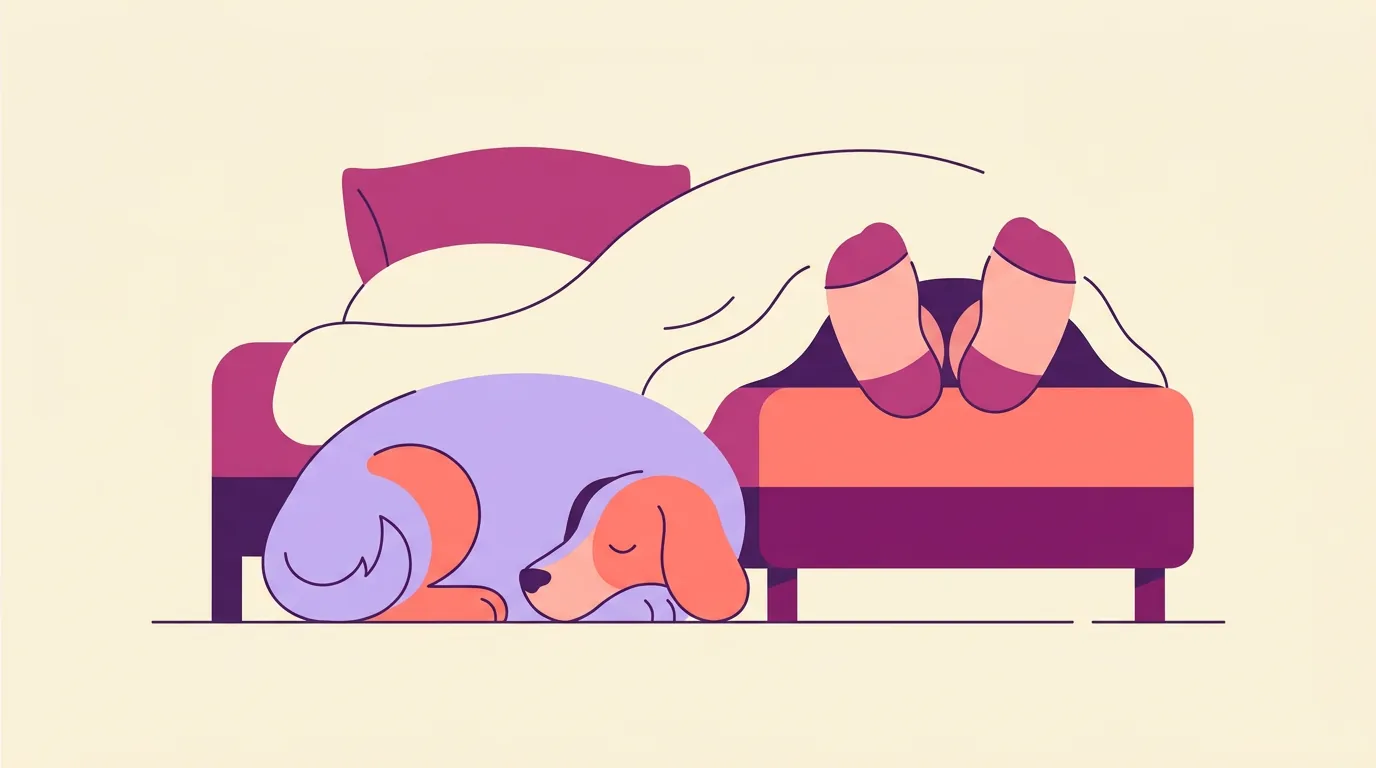
Why Does My Dog Sleep at My Feet? Loyalty, Warmth & the Pack
Your dog could sleep anywhere, but they pick your feet. It’s loyalty, security, and a little bodyguard instinct rolled into one.
Why Does My Dog Bark in His Sleep? Inside Doggy Dreams
Muffled woofs, paddling paws, twitchy whiskers — your dog is dreaming. Here’s what’s going on in there.
 🐱 Cat Mystery
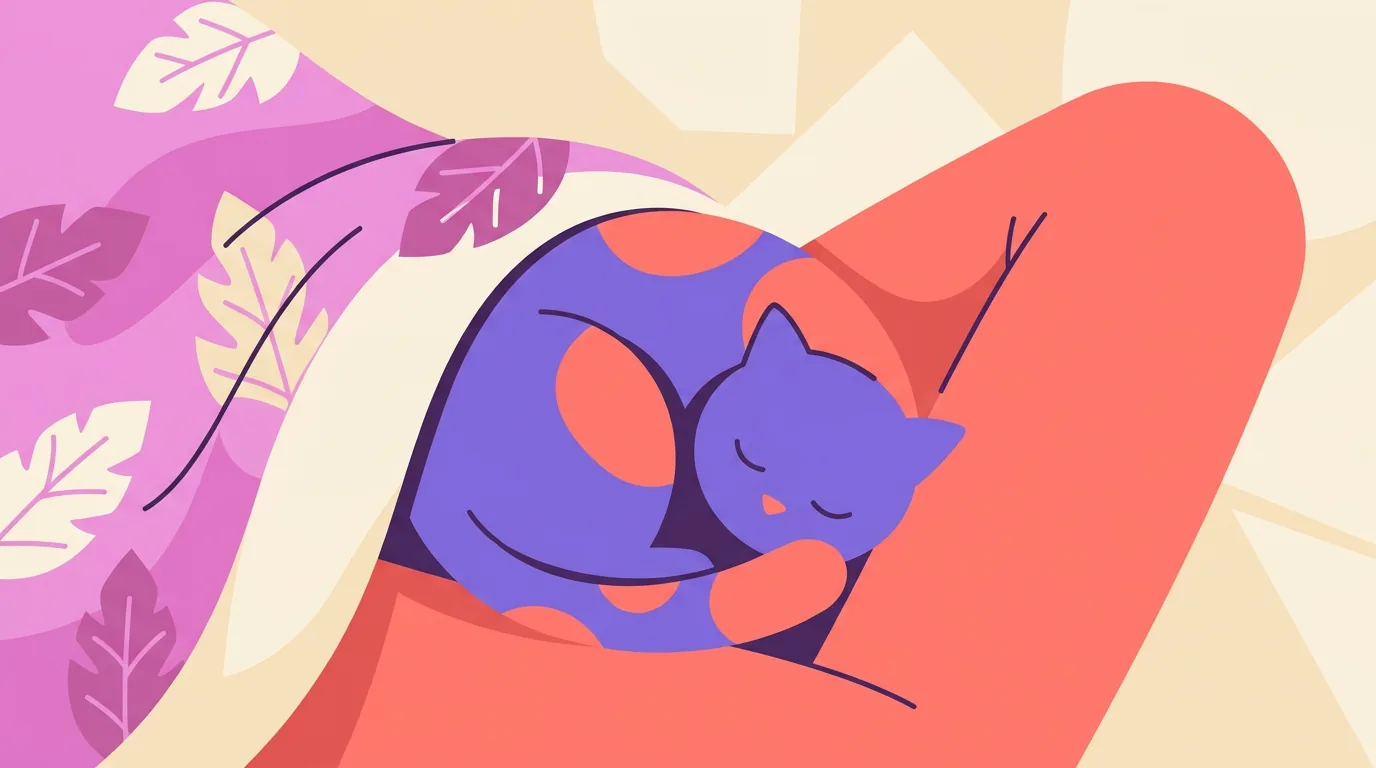
Why Does My Cat Sleep Between My Legs? The Cozy Den Effect
Your legs make the perfect cat cave — warm, walled-in, and all about you. Here’s the cozy science behind it.
Why Does My Dog Yawn So Much?
Your dog yawns way more than seems sleepy — because for dogs, yawning is also communication. Here’s how.