The short answer
Couch-digging is an instinct to “make a nest” — dogs dig to create a comfy spot, regulate temperature, mark territory with paw scent, and burn energy. It’s usually normal, though it can also be boredom or anxiety.
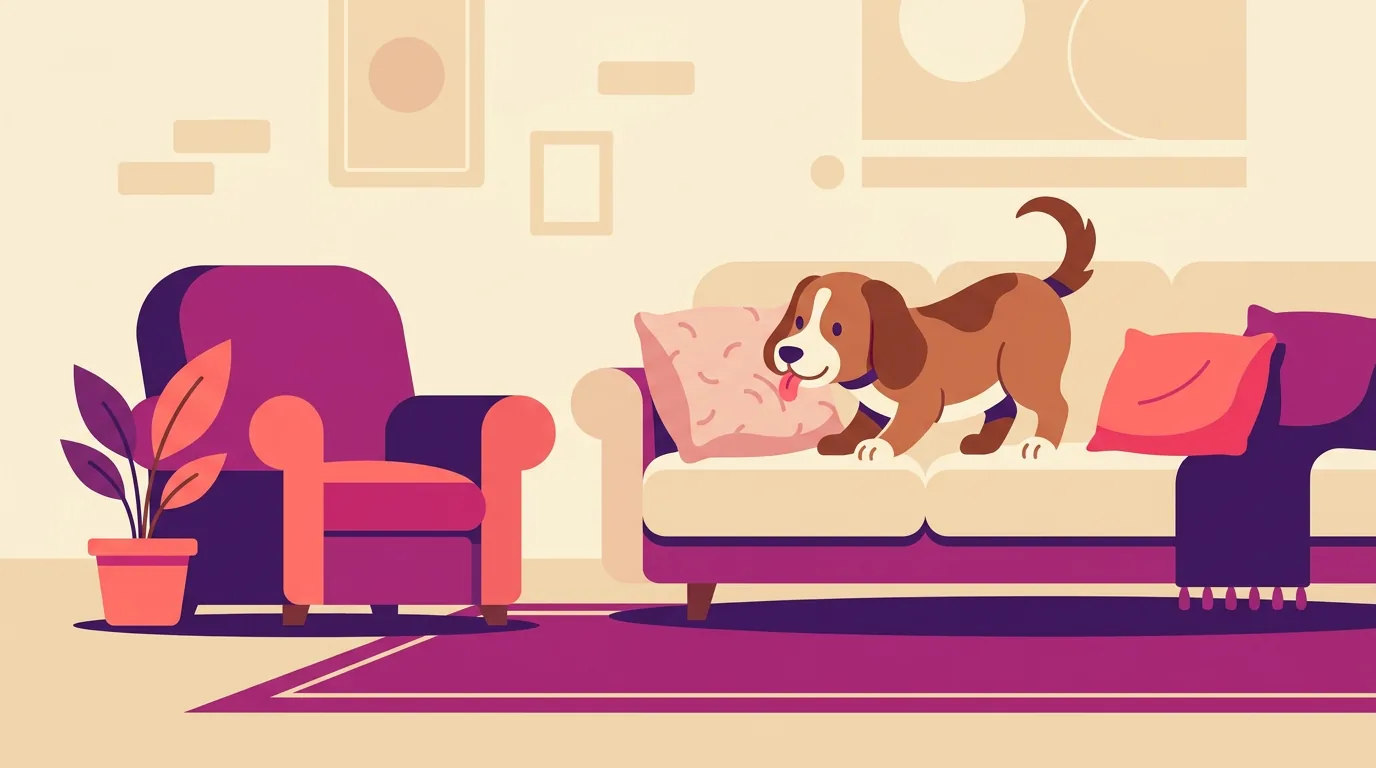
The determined scraping at a sofa cushion before settling — sometimes for a minute or more, sometimes destructively — is one of the more baffling things dogs do indoors, because it visibly achieves nothing.
It is nest-building
This belongs to a family of behaviours that made sense in an environment the animal no longer lives in. The motor pattern is inherited and largely automatic; the context that gave it a purpose has gone. That is why it looks futile — a dog cannot flatten a sofa cushion and a cat cannot bury a ceramic bowl — and why it persists anyway.
In the wild, a canid preparing to rest digs and scrapes to level the ground, remove stones and sharp debris, flatten vegetation, and expose cooler soil in heat or create a hollow that retains warmth in cold. It is genuine bed-making with a genuine payoff.
Your sofa needs none of that. The dog performs the sequence anyway, because the trigger is the intention to lie down rather than any assessment of whether the surface requires work.
The other functions
- Scent marking. Dogs have scent glands in their paws, so scraping deposits scent and marks the spot as theirs. This is why a dog often digs harder at a place another animal has been lying.
- Temperature. The dig-and-circle sequence exposes cooler material underneath in heat, or gathers bedding into a mound in cold. Some dogs dig noticeably more in temperature extremes.
- Comfort adjustment. Bunching a blanket or cushion into a ridge produces a bolster to lie against, which many dogs genuinely prefer.
- Anticipation and settling. The ritual itself appears to help some dogs transition to rest, the way a wind-down routine does.
- Pregnancy and pseudopregnancy. Intensified nesting in an unspayed female is worth noting rather than dismissing.
When digging is not nesting
The behaviour is normal when it is brief, precedes lying down, and ends with the dog settling. Three variations are worth separating.
Digging that does not end in rest — repeated, prolonged, and not followed by settling — is closer to a stress or compulsive behaviour. Veterinary guidance on compulsive disorders describes repetitive behaviours that become hard to interrupt and occur out of context, and digging can present that way.
Digging that is destructive, particularly when you are out, is more likely to be separation-related anxiety or boredom than nesting. The location matters: damage focused near doors and windows points toward anxiety.
And digging that has become frantic in an older dog, especially with disrupted sleep and disorientation, can accompany cognitive dysfunction.
Give the behaviour somewhere to go
The instinct is not going to be trained away, so redirect it. A bed with a loose blanket the dog can actually rearrange satisfies the digging sequence in a way a flat, taut surface does not — and dogs given something diggable usually leave the sofa alone. Trimming nails also matters more than people expect, since most sofa damage comes from nails catching fabric rather than from the force of the digging.
When to look closer
Worth a vet or behaviour conversation
Book a check if digging is prolonged and does not end in settling, is hard to interrupt, or occurs out of context — that pattern suggests a compulsive behaviour rather than nesting. Also if destruction happens mainly when your dog is alone, especially near doors and windows, which points to separation-related anxiety. In an unspayed female, a sudden intense nesting phase can indicate pregnancy or pseudopregnancy. And in an older dog, new frantic digging alongside disrupted sleep or disorientation is worth investigating as cognitive change.
Gear that actually helps
Hand-picked for this behavior. We may earn a small commission — at no cost to you.
Frequently asked
Why does my dog dig on the couch before lying down?
It is inherited nest-building. Wild canids dig to level ground, remove debris, flatten vegetation and adjust temperature before resting. The motor pattern is triggered by the intention to lie down, not by whether the surface actually needs the work.
Is my dog marking the couch?
Partly, yes. Dogs have scent glands in their paws, so scraping deposits scent and marks the spot. That is why dogs often dig harder at a place another animal has been lying.
How do I stop my dog damaging the sofa?
Redirect rather than suppress — the instinct will not train away. Give a bed with a loose blanket the dog can actually rearrange, which satisfies the digging sequence in a way a flat taut surface does not. Trim nails too; most damage comes from nails catching fabric.
When is digging a problem?
When it is prolonged and does not end in settling, is hard to interrupt, or happens out of context — that suggests a compulsive behaviour rather than nesting. Destruction focused near doors and windows while you are out points to separation anxiety instead.
Why does my dog dig more in hot or cold weather?
The dig-and-circle sequence exposes cooler material underneath in heat, or gathers bedding into a mound for warmth in cold. Some dogs noticeably increase it at temperature extremes, which fits the original function.
My unspayed dog has started nesting intensely. Should I be concerned?
It is worth a vet conversation. A sudden intense nesting phase in an unspayed female can indicate pregnancy or pseudopregnancy rather than ordinary bed-making.
Sources
Every claim on this page is checked against published veterinary and animal-behaviour research. Here’s where it comes from.
- 1Why Dogs Turn Around Before Lying Down — VCA Animal Hospitals
- 2Compulsive Disorders in Dogs — VCA Animal Hospitals
- 3Understanding Dog Body Language — American Kennel Club
Keep exploring
Why Does My Dog Dig on the Bed?
Before settling, your dog turns the bed into a construction site. It’s ancient nesting instinct. Here’s why.
 🐶 Dog Mystery
Why Does My Dog Lick the Couch? Boredom, Taste, or Something Else?
Your dog treating the sofa like a lollipop is oddly common. Here’s what they’re actually tasting — and when to step in.
Why Does My Dog Hump His Bed?
It’s awkward, but bed-humping usually isn’t what you think. Here’s what’s really driving it.
Why Does My Dog Get Zoomies After a Bath?
Bath’s done and your dog explodes into laps around the house. It’s called a FRAP — and it’s totally normal.
Why Does My Dog Circle Before Lying Down?
The pre-nap spin ritual is pure ancestral instinct — here’s the wild origin, and when to take note.
Why Does My Dog Hide Treats?
Your dog stashes treats under the couch cushions like tiny treasure. It’s ancient survival instinct at work.