 🐱 Cat Mystery
The short answer
A little drool during deep purring and kneading is happy and harmless. But sudden, heavy, or smelly drooling can signal dental disease, nausea, or something stuck — and that needs a vet.
Drooling splits cleanly into two categories in cats, and telling them apart is the whole task. A small amount of drool from a deeply relaxed, purring, kneading cat is normal and harmless. Drool that appears in any other context is a symptom — and in cats it points overwhelmingly at the mouth.
The harmless kind
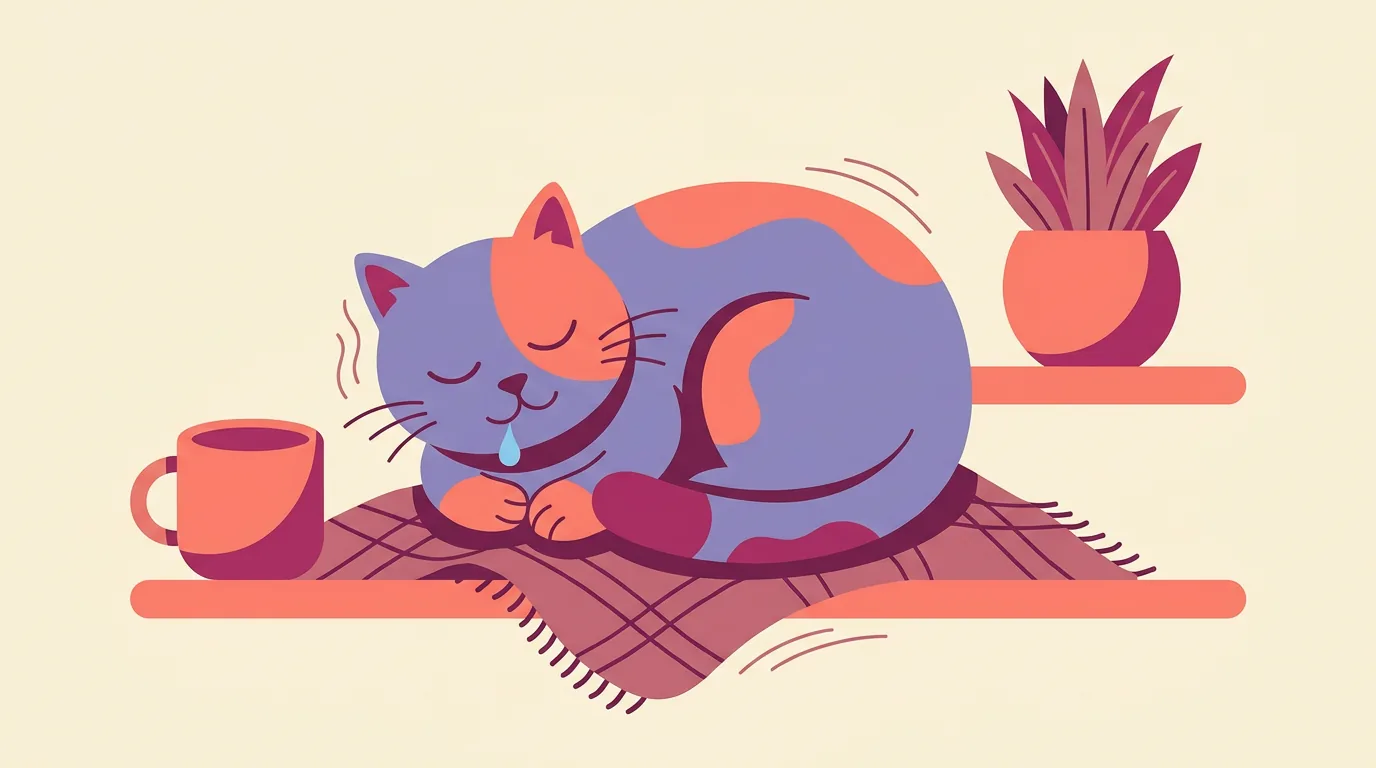
Some cats drool when they are extremely content. It shows up during kneading, during deep petting, or as a cat settles to sleep on someone's lap, and it is a carryover from nursing: as kittens, kneading and salivation and milk all arrived together, so the association persists.
The identifying features are context and consistency. Happy drool is clear and watery, it appears only during relaxed contact, it stops when the cat gets up, and the cat is otherwise completely normal — eating well, grooming normally, behaving as usual. If that describes your cat, there is nothing to do.
Why dental disease is the first thing to rule out
Outside of contentment, oral disease is by far the most common cause of drooling in cats, and it is extraordinarily common in the population generally. Veterinary sources put periodontal disease in a large majority of cats by middle age, and cats are exceptionally good at concealing oral pain.
There are three broad problems to know about.
- Periodontal disease. Plaque hardens into tartar, the gums become inflamed, and infection progresses to the tissues holding the teeth in place. It is painful and it is progressive.
- Tooth resorption. A condition where the tooth structure itself breaks down, exposing sensitive tissue. It is one of the most common and most painful dental conditions in cats, and affected teeth generally have to be extracted.
- Stomatitis. Severe, widespread inflammation of the mouth. Cats with it are often profoundly uncomfortable, may drool heavily, and frequently need substantial treatment.
The reason drooling is such a useful sign is that a painful mouth makes swallowing uncomfortable, so saliva simply accumulates and spills. Look for the companions: bad breath, pawing at the mouth, dropping food, chewing on one side, a preference for soft food over biscuits, or a cat that approaches the bowl hungry and then walks away.
The other causes
- Nausea. Cats salivate when nauseated, often with lip-licking and repeated swallowing. Causes range from kidney disease to pancreatitis to a hairball that will not move.
- Something stuck. A string, a piece of bone, a grass blade or a foreign object in the mouth or wrapped around the base of the tongue produces sudden, heavy drooling and frantic pawing at the mouth. String is a genuine emergency in cats.
- Something bitter. A cat that has licked a topical flea product, a plant, a cleaning agent, or been given a bitter oral medication will foam and drool almost immediately. Never apply dog flea products to cats — permethrin-based products are highly toxic to them.
- Stress. Some cats drool during car journeys, at the vet, or in acutely frightening situations. It resolves once the stressor is over.
- Upper respiratory infection. A congested cat that cannot breathe through its nose may hold its mouth open and drool as a consequence.
- Heat stress and, less commonly, neurological or facial nerve problems that impair swallowing.
What to look at before you call the vet
If your cat will allow it without a struggle, briefly look at the gums and lift the lip. Note whether the gums are red at the tooth line, whether there is visible tartar, whether one side of the mouth looks worse, and whether the drool is clear, thick, blood-tinged or foul-smelling. Do not force the mouth open, and do not reach for anything you can see under the tongue — a string must be removed by a vet, because pulling it can cause serious internal injury.
When to see a vet
Any drooling that is not clearly happy drool warrants a veterinary appointment. Cats mask pain so effectively that by the time drooling appears, dental disease is usually well established — and dental pain is one of the most under-treated welfare problems in pet cats.
Treat these as urgent
Go the same day for: sudden, heavy or foaming drool; blood in the saliva; a cat pawing frantically at its mouth; any suspicion your cat has ingested or licked a chemical, plant, or a flea product intended for dogs; a string or thread visible in the mouth; difficulty swallowing or breathing; or drooling with collapse, disorientation or a head tilt. Book promptly, though not necessarily same-day, for drooling with bad breath, dropping food, weight loss or reduced appetite.
What treatment usually looks like
For dental causes, assessment requires a general anaesthetic and dental radiographs — a great deal of feline dental disease, tooth resorption especially, is invisible above the gum line. That can feel like a lot for a cat that is 'only drooling', but the alternative is leaving a painful mouth untreated.
Owners very frequently report that their cat became more playful, more affectionate and more interested in food after dental treatment — behaviour changes they had previously attributed to age. That is the clearest illustration of how well cats hide oral pain, and why drooling is worth taking seriously rather than watching.
Gear that actually helps
Hand-picked for this behavior. We may earn a small commission — at no cost to you.
Frequently asked
Is it normal for a cat to drool?
A small amount of clear drool from a deeply relaxed, purring or kneading cat is normal — it is a carryover from nursing. Drooling in any other context is a symptom and should be checked, most often pointing at dental disease or nausea.
Why is my cat drooling all of a sudden?
Sudden heavy drooling most often means something in or affecting the mouth: a foreign body such as string, a bitter or toxic substance that has been licked, oral pain, or nausea. Sudden onset with pawing at the mouth or foaming should be seen the same day.
Does drooling mean my cat has dental disease?
Frequently, yes. Oral disease is the most common non-contentment cause of drooling in cats, and periodontal disease affects a large majority of cats by middle age. Look for bad breath, dropping food, chewing on one side, or approaching food then walking away.
My cat drooled after a flea treatment. Is that dangerous?
It can be. Cats commonly foam from the bitter taste after licking a topical product, but permethrin-based flea products intended for dogs are highly toxic to cats and cause tremors and seizures. If a dog product was used, contact a vet immediately.
Should I try to remove something I can see in my cat's mouth?
No, especially not string or thread. Pulling a string that extends into the digestive tract can cause serious internal injury. It needs to be removed by a vet. Do not force the mouth open at home.
Why does my cat drool when I pet her?
That is happy drool — the association between kneading, contentment and salivation formed during nursing. If it is clear, only happens during relaxed contact, and your cat is otherwise well, no action is needed.
Sources
Every claim on this page is checked against published veterinary and animal-behaviour research. Here’s where it comes from.
- 1Feline Dental Disease — Cornell Feline Health Center
- 2Dental Disease in Cats — VCA Animal Hospitals
Conditions mentioned on this page
Full guides to each one — signs, urgency, and what to ask your vet.
Keep exploring
 🐱 Cat Mystery
Why Is My Cat Sneezing? Harmless Tickle vs. Time to Call the Vet
One cute little sneeze? No big deal. A sneezing fit with goopy eyes? Different story. Here’s how to tell them apart.
Why Does My Cat Trill? The Happy Chirp, Explained
That cute little “brrp!” your cat makes? It’s one of their warmest, friendliest sounds. Here’s what it means.
Why Does My Cat Follow Me to the Bathroom?
No privacy with a cat in the house. Here’s why the bathroom always comes with a feline chaperone.
Why Does My Cat Lay on My Clothes?
Fresh laundry, worn hoodie, it doesn’t matter — your cat will claim it. Here’s the cozy reason why.
Why Does My Cat Sleep on My Pillow?
Your cat has claimed your pillow as their own. It’s a bigger compliment than it seems.
Why Does My Cat Lick the Wall?
Tongue to the wall? It’s odd but common — and here’s how to tell harmless curiosity from a red flag.