 🐱 Cat Mystery
The short answer
A loud purr usually just means a very happy, content cat — purr volume varies by individual, breed, and how relaxed they are. Cats also purr to self-soothe and even to heal, and some use a louder, more urgent “solicitation purr” at mealtimes.
Purr volume varies enormously between cats, and a genuinely loud purrer is usually just built that way. The more useful question is not why it is loud but what purring actually signals — because the common assumption that it always means happiness is one of the more consequential misreadings in cat ownership.
Why some cats are louder
- Individual anatomy. Larynx size and the surrounding structures vary, and that alone produces a wide range of volumes between cats.
- Body size and chest resonance. A larger chest cavity amplifies, which is part of why some big cats purr audibly across a room.
- Breed tendency. Siamese and other Orientals tend to be more vocal generally; Persians and some other breeds tend toward quieter purrs.
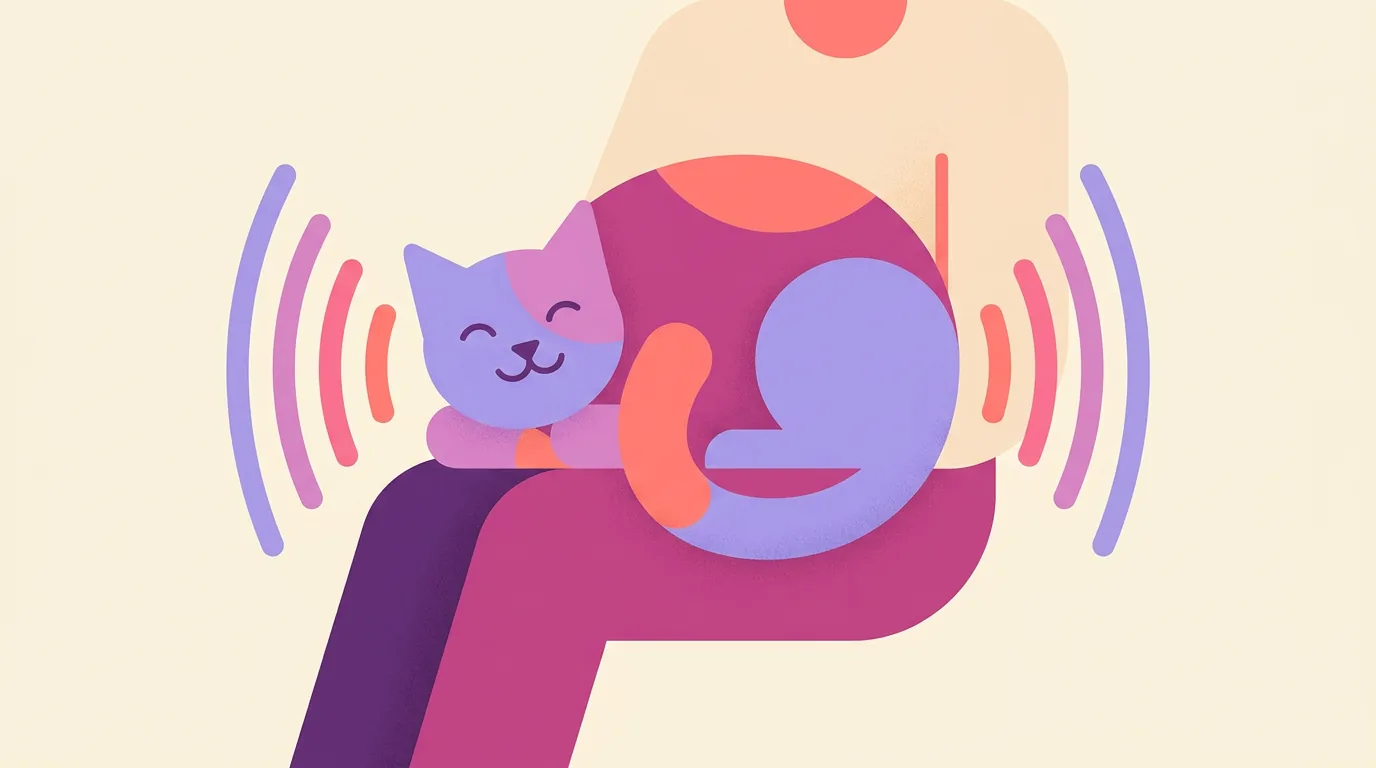
- Position. A purring cat on your chest is using your ribcage as a sounding board, which is why it seems dramatically louder there than on your lap.
- Age and habit. Some cats simply purr more readily and more intensely than others, and it is consistent across their lives.
Purring is produced by rapid, rhythmic movement of the laryngeal muscles opening and closing the glottis, which interrupts airflow during both inhalation and exhalation. That continuous in-and-out quality is what distinguishes a purr from other vocalisations — and it is why a purring cat can purr and breathe indefinitely.
Purring is not only contentment
This is the part worth knowing. Cats purr when content, but they also purr when frightened, injured, giving birth, and dying. Vets frequently see cats purr on the examination table, and purring in an obviously unwell cat is a recognised and slightly counterintuitive observation.
The most widely discussed explanation is that purring functions as a self-soothing mechanism as well as a social signal — a way of managing distress rather than only expressing pleasure. There is also longstanding interest in whether the low frequencies involved have some role in healing or pain relief, though that idea is considerably less well established than popular articles suggest and is better treated as an open hypothesis than a fact.
The practical consequence is simple: do not use purring alone to conclude a cat is fine. A purring cat that is hiding, hunched, not eating, or breathing oddly is not a happy cat.
Reading the whole cat
Context and body language settle what a purr means far better than volume does.
- Content purring — loose body, half-closed or slow-blinking eyes, ears forward, often kneading, usually in contact with you.
- Solicitation purring — a purr with an urgent, higher-frequency component embedded in it, typically around feeding time. Owners find it unusually hard to ignore, which appears to be the point.
- Distress purring — purring with a tense body, tucked posture, flattened or sideways ears, dilated pupils, hiding, or reluctance to be touched. This one matters.
The solicitation purr is a real thing
If your cat's purr around mealtimes sounds subtly more insistent and harder to tune out than its evening lap purr, you are not imagining it. Cats can embed a higher-frequency urgent component into a purr, and people consistently rate it as more difficult to ignore. It is a genuinely impressive piece of manipulation, and the only defence is a timed feeder that breaks the link between you and food.
When purring is worth attention
Purring itself is not a medical sign. But a change in purring, or purring in the wrong context, can be.
See a vet if
Your cat is purring while hiding, hunched, reluctant to move or refusing food; purring comes with rapid or laboured breathing, open-mouthed breathing, or obvious effort; the purr has changed in sound, become rasping, or is accompanied by a change in meow, which can indicate laryngeal or upper airway problems; or a cat that always purred has largely stopped, which alongside reduced grooming and appetite change is a meaningful shift. Open-mouthed breathing in a cat is always urgent — cats do not pant like dogs, and it indicates significant respiratory distress.
If the volume is the actual problem
Some people genuinely cannot sleep through a loud purrer on the bed, and that is a reasonable thing to want to change without wanting to change the cat.
Position is the lever. A purr on your chest is amplified by your own ribcage; the same cat at the foot of the bed is dramatically quieter. Providing a warm, appealing bed at the far end — ideally a heated one — usually relocates the cat without a confrontation. Shutting the cat out of the bedroom tends to trade a purr for yowling at the door, which is rarely an improvement.
Gear that actually helps
Hand-picked for this behavior. We may earn a small commission — at no cost to you.
Frequently asked
Why is my cat's purr so loud?
Mostly individual anatomy — larynx size and the surrounding structures vary a lot between cats — plus body size and chest resonance. Position matters too: a cat purring on your chest uses your ribcage as a sounding board, which makes it seem far louder than on your lap.
Does purring always mean my cat is happy?
No, and this is worth knowing. Cats also purr when frightened, injured, giving birth and dying, and vets commonly see cats purr on the examination table. It appears to function as self-soothing as well as a social signal. Never use purring alone to conclude a cat is fine.
How does purring work?
Rapid rhythmic movement of the laryngeal muscles opens and closes the glottis, interrupting airflow during both inhalation and exhalation. That continuous in-and-out quality is what makes a purr distinct and lets a cat purr and breathe indefinitely.
What is a solicitation purr?
A purr with a higher-frequency urgent component embedded in it, typically used around feeding time. People consistently rate it as harder to ignore than an ordinary purr. A timed feeder that breaks the link between you and food is the practical defence.
Can purring mean my cat is in pain?
Yes. Purring while hiding, hunched, reluctant to move or refusing food is a warning rather than reassurance. Get a vet check, and treat open-mouthed or laboured breathing as urgent — cats do not pant like dogs, so it indicates real respiratory distress.
How do I stop my cat's purring keeping me awake?
Change the position rather than the cat. A purr on your chest is amplified by your ribcage; the same cat at the foot of the bed is much quieter. A warm or heated bed at the far end usually relocates them. Shutting the cat out often just trades purring for yowling.
Sources
Every claim on this page is checked against published veterinary and animal-behaviour research. Here’s where it comes from.
- 1The Special Needs of the Senior Cat — Cornell Feline Health Center
- 2Hyperthyroidism in Cats — Cornell Feline Health Center
Keep exploring
Why Does My Cat Follow Me to the Bathroom?
No privacy with a cat in the house. Here’s why the bathroom always comes with a feline chaperone.
Why Does My Cat Lay on My Clothes?
Fresh laundry, worn hoodie, it doesn’t matter — your cat will claim it. Here’s the cozy reason why.
Why Does My Cat Sleep on My Pillow?
Your cat has claimed your pillow as their own. It’s a bigger compliment than it seems.
Why Does My Cat Lick the Wall?
Tongue to the wall? It’s odd but common — and here’s how to tell harmless curiosity from a red flag.
Why Does My Cat Chatter at Birds?
Window open, bird outside, and your cat goes “ek-ek-ek.” Here’s what that funny chatter really means.
Why Does My Cat Get the Zoomies at Night?
Midnight sprints across the furniture? It’s normal cat biology — and very fixable. Here’s how.