 🐱 Cat Mystery
The short answer
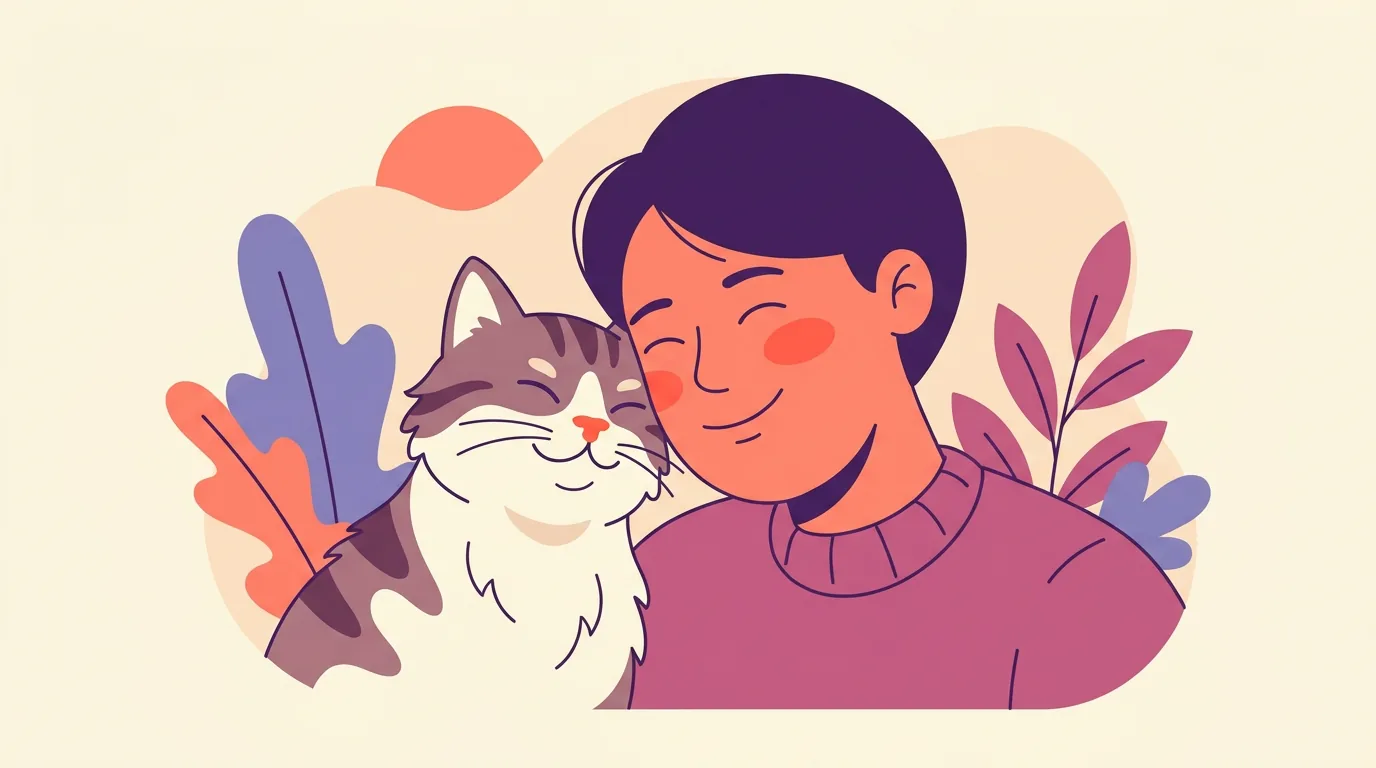
Head-butting (called ‘bunting’) is how cats mark you with their scent and claim you as part of their trusted circle. It’s one of the friendliest gestures a cat can make.
The head-butt — properly called bunting — is one of the least ambiguous things a cat does. Unlike most feline behaviour it has essentially no negative interpretation, and it is worth understanding because it tells you exactly where you stand.
What bunting actually is
Cats carry scent glands in the cheeks, the chin, the forehead, the base of the tail and the paw pads. They do not mark territory the way dogs do — they build a shared group odour, and they treat everything carrying it as safe. Research on feline social structure describes proximity and scent exchange as the main currency of cat relationships, which is why so much cat affection is delivered by pressing a gland against you rather than by anything we would recognise as a display.
Bunting is the deliberate application of the forehead and cheek glands to something. When your cat presses its head into your hand, your leg or your face, it is depositing scent — and it is choosing you as a place to put it.
That distinction matters. A cat rubbing a doorframe is mapping its environment. A cat bunting a person is doing something socially specific: including that person in the group profile it maintains with the individuals it lives closest to.
Why it is such a reliable signal
Bunting requires a cat to lower its head, close the distance, and briefly give up its view of the room. Cats do not do that near anything they are wary of.
It is also directed rather than incidental. Cats bunt particular people, and research on cat social behaviour finds affiliative contact concentrated among individuals with established relationships rather than spread evenly. If your cat bunts you and not a visitor, that is not a coincidence — it is the whole point of the behaviour.
Bunting versus rubbing versus everything else
- Bunting — a deliberate press of the forehead, sometimes with real force. Social, affiliative, and usually a greeting or a request.
- Cheek rubbing — sliding the side of the face along you or an object. Same gland system, more about coating a surface than making contact.
- Full-body rubbing — winding around your legs. Combines scent deposition with a greeting, and is the version most often paired with a request for food.
- Head pressing — pushing the head into a wall or furniture and holding it there. Completely different and a medical emergency. See the warning below.
What your cat wants when it bunts
Context tells you. A bunt on arrival is a greeting. A bunt against your hand while you are stroking means continue. A bunt followed by walking toward the kitchen is a request. A bunt while you are lying down is usually social contact for its own sake.
The one to read carefully is the insistent, repeated bunt from a cat that will not settle — that is closer to a demand, and it often has a specific object in mind.
How to bunt back
Cats respond well to a gentle press of your forehead or the bridge of your nose to theirs, but only with a cat that already knows you. For everyone else, the reliable version is offering a knuckle or fingertip at the cat's nose height and letting the cat close the distance itself. That is the feline equivalent of a handshake, and letting the cat choose contact is what makes it work.
When bunting changes
Bunting itself is benign. The pattern worth noticing is a change from your cat's own baseline — a cat that stops bunting, or one that becomes suddenly, insistently demanding of head contact.
Cats seek proximity when they feel unwell, and in older cats hyperthyroidism, high blood pressure and cognitive dysfunction all alter social behaviour. Equally, a cat that used to bunt and stops may have dental pain or head or neck discomfort making the contact unpleasant.
Head pressing is not bunting — it is an emergency
Bunting is a brief, deliberate press against a person or object, usually with the cat relaxed and often purring. Head pressing is pushing the head against a wall or furniture and holding it there, frequently with pacing, circling, disorientation or apparent blindness. Head pressing is a recognised sign of neurological disease and needs a same-day veterinary appointment, not observation. If you are unsure which you are seeing, film it and call your vet.
Gear that actually helps
Hand-picked for this behavior. We may earn a small commission — at no cost to you.
Frequently asked
Why does my cat headbutt me?
It is called bunting, and it deposits scent from glands in the forehead and cheeks. Cats build a shared group odour rather than marking territory, so bunting you is an act of inclusion — you are being folded into the group profile.
Is headbutting a sign of affection?
It is one of the most reliable ones cats have. Bunting requires lowering the head and briefly giving up a view of the room, which cats do not do near anything they are wary of. It is also directed at particular people rather than distributed evenly.
Should I headbutt my cat back?
With a cat that knows you well, a gentle press of your forehead or the bridge of your nose is usually welcomed. With any other cat, offer a knuckle at nose height and let the cat close the distance — letting it choose the contact is what makes it work.
What is the difference between headbutting and head pressing?
Bunting is a brief, deliberate press against you or an object, with the cat relaxed and often purring. Head pressing is pushing the head into a wall or furniture and holding it, often with circling, disorientation or apparent blindness — that is a neurological emergency needing a same-day vet appointment.
My cat stopped headbutting me. Why?
Worth noting. Cats that stop initiating contact may have dental pain, or head and neck discomfort that makes pressing unpleasant. A change from your cat's own baseline, especially with appetite or grooming changes, deserves a vet check.
Why does my cat headbutt then bite?
Bunting often accompanies stroking, and sustained repetitive stroking can tip a relaxed cat into overstimulation. Watch for a lashing tail, twitching skin along the back and ears rotating back, and stop petting before the nip rather than after.
Sources
Every claim on this page is checked against published veterinary and animal-behaviour research. Here’s where it comes from.
- 1Social organization in the cat: a modern understanding — Journal of Feline Medicine and Surgery (via PubMed Central)
- 2Influence of familiarity and relatedness on proximity and allogrooming in domestic cats — Curtis, Knowles & Crowell-Davis, via PubMed
Keep exploring
Why Does My Cat Follow Me to the Bathroom?
No privacy with a cat in the house. Here’s why the bathroom always comes with a feline chaperone.
Why Does My Cat Lay on My Clothes?
Fresh laundry, worn hoodie, it doesn’t matter — your cat will claim it. Here’s the cozy reason why.
Why Does My Cat Sleep on My Pillow?
Your cat has claimed your pillow as their own. It’s a bigger compliment than it seems.
Why Does My Cat Lick the Wall?
Tongue to the wall? It’s odd but common — and here’s how to tell harmless curiosity from a red flag.
Why Does My Cat Chatter at Birds?
Window open, bird outside, and your cat goes “ek-ek-ek.” Here’s what that funny chatter really means.
Why Does My Cat Get the Zoomies at Night?
Midnight sprints across the furniture? It’s normal cat biology — and very fixable. Here’s how.